DNA Structure MCQ Test
Understand the Blueprint of Life
DNA (Deoxyribonucleic Acid) is the genetic material that carries the code of life. Every living organism relies on its precise structure for inheritance and cellular functions.
What You’ll Learn in This DNA MCQ Test
Our interactive DNA structure MCQ test helps you understand the double helix model, base pairing rules, and functions of nucleotides in a fun, quiz-based format.
Key Topics Covered
Components of DNA: sugar, phosphate, and nitrogen bases
Watson and Crick’s double helix model
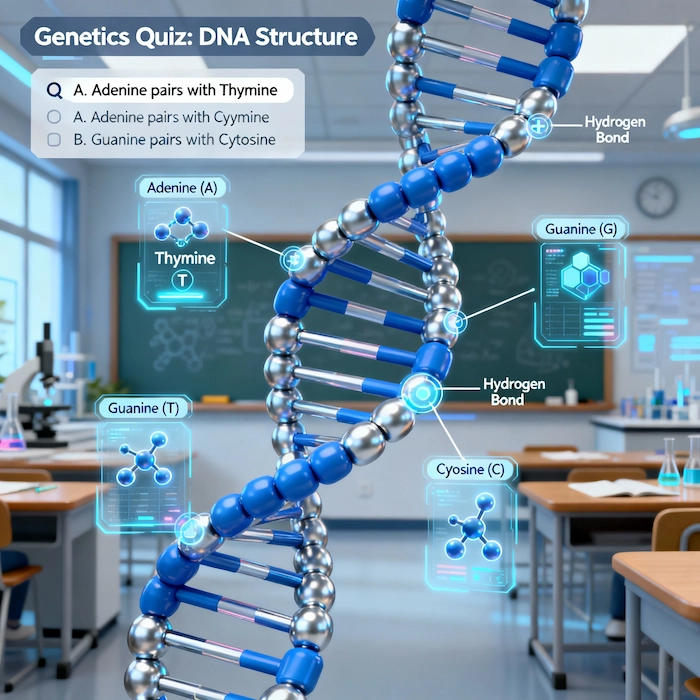
Base pairing (A–T and G–C) and hydrogen bonding
Chromosomal DNA vs. mitochondrial DNA
DNA replication and stability
Why Attempt DNA Structure MCQs?
Practicing multiple-choice questions improves your memory, speed, and understanding of molecular biology concepts.
Ideal for Students and Exam Preparation
Perfect for NEET, CSIR-NET, GATE, ICAR, and university exams, these quizzes reinforce both basic and advanced molecular biology knowledge.
Interactive Learning Experience
Each question includes visuals and explanations to help you visualize DNA’s 3D structure and base pair alignment.
Boost Your Score and Confidence
Take our DNA structure MCQ test regularly to track progress and strengthen your molecular foundation.
Start the Quiz Now
Unlock your inner geneticist — explore, answer, and master the DNA structure quiz today!

Click here for more tests
Follow for more